
Passive House Windows in Scotland: What Self-Builders Should Look For

If you are researching passive house windows in Scotland, it is easy to get pulled straight into U-values, triple glazing and brochure promises. Those details matter, but they are only part of the picture. For self-builders, the right choice depends on how the window system performs as a whole, how it is installed and how it works with the rest of the building envelope.
Searches for passive house windows Scotland often happen at specification stage, when one good decision can protect comfort, energy performance and long-term value. In Scotland's climate, small mistakes around glazing design, airtightness or solar control can quickly show up as heat loss, draughts, condensation risk or overheating. Here is what we believe self-builders should check before signing off a window package.
At Ecowin, we help homeowners, architects, developers and self-builders across Scotland specify premium windows, doors and bespoke glazing with a consultancy-led approach. The aim is simple: choose a solution that performs properly on site, not just on paper.
What makes a window suitable for a passive house project?
A passive house window is not just a standard unit with an extra pane of glass. For very low-energy homes, the window has to support the wider fabric strategy of the build.
Whole-window thermal performance, not just a headline glass number.
A well-insulated frame with good build quality and durable weather seals.
Glazing specified for orientation, daylight and solar gain, not one generic glass unit everywhere.
An airtight installation detail that reduces thermal bridging around the reveal and cill.
Strong weather performance for Scotland's wind, rain and exposed sites.
The important point is this: a high-performing product can still underperform if the installation detail is weak, or if the glazing is poorly matched to the design.
Passive House Windows Scotland: key things self-builders should look for
1. Whole-window performance, not just centre-pane figures
When you compare quotes, check whether the figure being discussed is a whole-window value rather than a centre-pane glass value. Whole-window performance gives a far more realistic picture of what the installed unit will do in a real building.
It is also worth asking what size and opening style the figure is based on. Performance can change depending on the proportions of the frame, the sash and the glass area.
2. Frame design that supports low-energy building
Good passive house windows usually rely on more than glass. Frame construction, seals, thermal breaks and overall build quality all affect comfort and efficiency. Self-builders should look for a system that balances thermal performance with durability, security and the appearance they want.
At Ecowin, we work with premium aluminium and timber systems because different projects need different answers. A contemporary new build may call for slim sightlines and large openings, while another project may prioritise a warmer natural finish or a different maintenance profile.
3. Triple glazing is common, but the specification still needs thought
Triple glazing is often part of the answer on low-energy builds in Scotland, but pane count alone does not guarantee results. Spacer bars, coatings, gas fill and the way the unit works with the frame all matter.
This is one reason self-builders benefit from early glazing design and specification advice rather than choosing on a simple brochure comparison. The aim is to create a package that suits the whole house, not just to chase one number.
4. Solar gain and overheating need to be part of the conversation
In Scotland, useful winter sun can help low-energy homes, especially on well-oriented elevations. At the same time, large south- or west-facing areas of glass can increase the risk of overheating in spring and summer if solar control has not been considered.
That means the best specification is not always the same glass on every elevation. Ask how solar gain, shading, room use and window size have been factored into the recommendation.
5. Airtight installation and junction detailing from day one
The junction between the window and the wall is where many performance problems begin. Poorly considered reveals, thresholds or sealing details can undermine an otherwise strong product.
For self-build projects, window positioning, airtight tapes or membranes, insulated packers and threshold design should all be discussed early. If your build uses timber frame or another off-site system, those details need to line up with the frame package and the wider airtightness strategy.
6. Weather performance for Scottish conditions
Scotland's climate puts more pressure on glazing than a showroom display ever will. Wind exposure, driving rain and coastal or open locations make weathering, drainage and installation quality especially important.
Self-builders should look for systems with robust sealing and proven build quality, and they should make sure the installation team understands how to protect performance on site. This matters just as much on feature glazing as it does on standard openings.
7. Large glazed doors and feature windows without losing performance
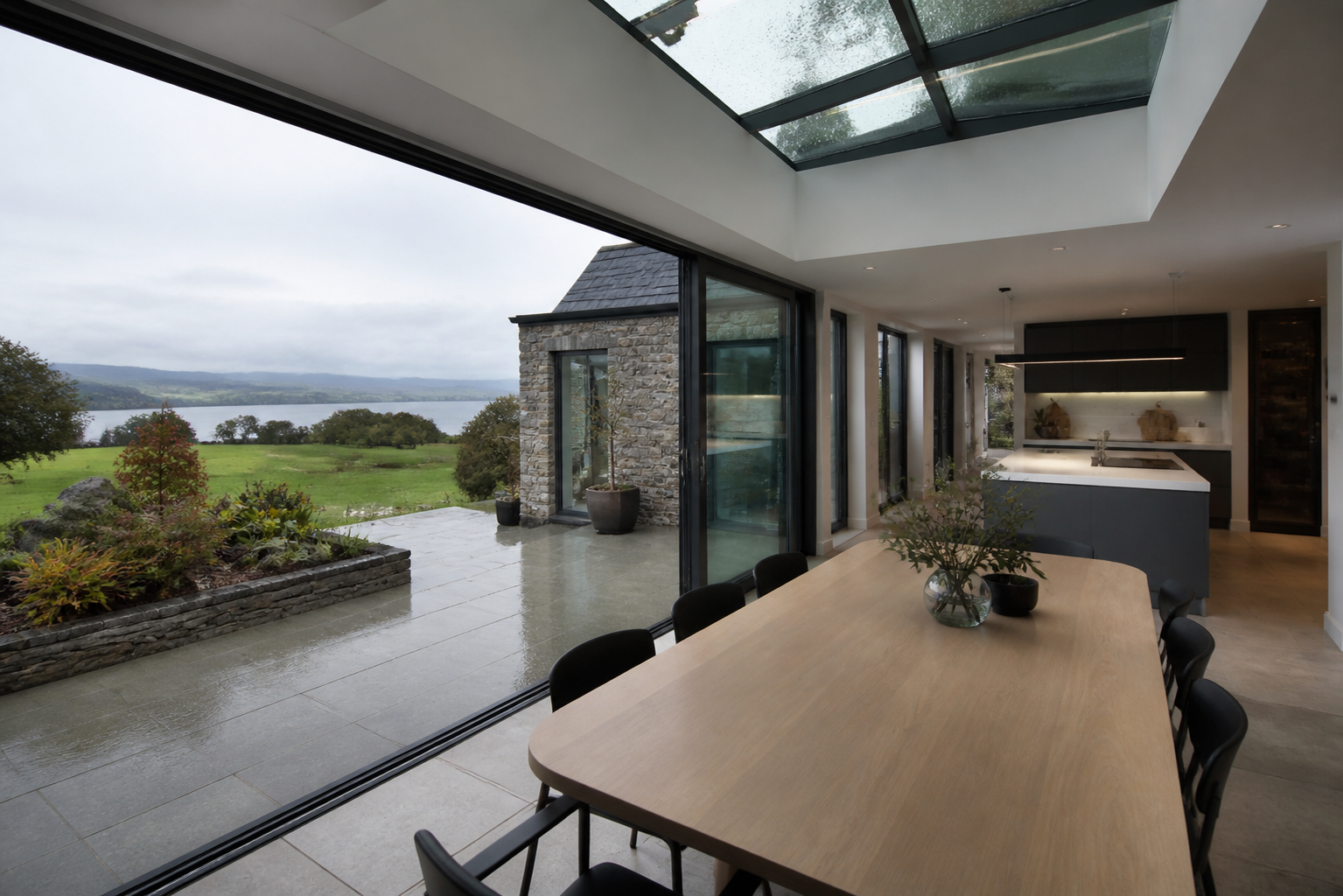
Many self-builders want bigger panes, sliding doors and more light. That can work very well in a low-energy home, but only when the size, opening type and structural interface are handled carefully.
Large format glazing, lift and slide doors and architectural glazing all need to be evaluated for thermal performance, airtightness, threshold detail and practical day-to-day use. Bigger glass should improve the living experience, not create weak points in the envelope.
Questions worth asking before you place an order
Is the quoted performance a whole-window figure?
What size and configuration is that figure based on?
How will the window be positioned in the wall build-up?
What is the plan for airtight sealing at the reveals and thresholds?
Will different elevations use different glazing specifications if needed?
How will large doors or feature windows affect comfort and heat loss?
Who is coordinating the design detail between supplier, builder and installer?
If a supplier cannot explain these points clearly, it is worth slowing the process down before committing.
Why early advice matters on a self-build
Windows and doors influence more than energy performance. They affect structural openings, internal finishes, daylight, furniture layouts, ventilation and how the home feels in use. Leaving the decision too late can force compromises on design, budget or performance.
That is why our self-build window and door solutions focus on early coordination as well as product supply. When glazing is considered alongside the build-up of the wall, threshold levels and room orientation, the end result is usually smoother and more successful.
Why self-builders across Scotland speak to Ecowin
Ecowin Ltd is based in Hillend, Dunfermline and has been established since 2012. We help homeowners, architects, developers and self-builders across Scotland choose premium energy-efficient windows, doors and bespoke glazing solutions suited to the way they want their buildings to perform and look.
We specialise in high-performance aluminium and timber systems, large format glazing and new build window and door packages, and we take time to understand the brief before recommending a solution. We are also a member of the Glass & Glazing Federation.
Our approach is personal and consultancy-led. Customers regularly praise our clear communication, first-class fitting and after-sales support, and one new-build customer highlighted the low heat loss values of the systems supplied and the support received from conception through to aftercare. If you want practical guidance instead of a one-size-fits-all sales pitch, that early conversation can make a real difference.
You can also explore our high-performance glazing solutions to see how we approach new builds, renovations and bespoke glazing projects.
Frequently asked questions
Are triple glazed windows always needed for passive house projects in Scotland?
Triple glazing is common on low-energy and passive house style projects because it can help reduce heat loss and improve comfort near the glass. However, the right answer depends on the whole system, the building design and the performance target. It is better to assess the complete window and installation detail than to assume pane count alone will decide the outcome.
What U-value should I ask for when comparing passive house windows?
Start by asking for the whole-window value and the size it relates to. A single number without context can be misleading. On very low-energy projects, the right target depends on the wider fabric strategy, orientation and whether the build is working towards a formal certification standard or an in-house performance goal.
Can large sliding doors work in a low-energy self-build?
Yes, if they are specified carefully. Large glazed doors can work well in low-energy homes, but they need the right frame system, glass specification, threshold detail and installation approach. Early design coordination is especially important on wide openings.
When should I choose windows for a self-build project?
Earlier than many people expect. It helps to think through glazing at design stage, before structural openings, airtightness details and threshold levels are fixed. Early input usually gives you better options and reduces the risk of late changes.
Plan your glazing with confidence
Choosing passive house windows in Scotland is about far more than ordering triple glazing. The best results come from matching frame design, glass specification, orientation and installation detail to the way the whole house is being built.
If you are planning a self-build or low-energy project, speak to Ecowin about specifying passive house windows and glazing with confidence. Call us on 01383 824458, email sales@ecowin.co.uk or visit www.ecowin.co.uk to start the conversation.
Comments